LOS ANGELES, CALIFORNIA
Actor Headshot Tips for a Casting-Ready Look
A casting director may spend only a few seconds with your image before deciding whether to read your submission more closely. That is why the best actor headshot tips are not about trying to look more dramatic, more glamorous, or more marketable than you are. They are about creating an immediate, believable connection: a polished image that makes your natural presence easy to see.
A strong headshot is an essential professional asset. It introduces your casting range before you enter the room, supports the work of your agent or manager, and helps the right people picture you in a role. The goal is not a perfect photograph. It is a current, specific, compelling representation of the actor audiences will recognize when you walk into an audition.
Actor Headshot Tips That Start Before the Camera
The session becomes easier when you arrive with clarity. Before selecting clothing or practicing expressions, consider how you are currently being cast, the roles you are pursuing, and the qualities people notice first when they meet you. Warmth, authority, edge, intelligence, humor, sensitivity, and confidence can all be part of your range. Your headshot does not need to communicate every one of them at once.
Ask yourself a simple question: what would make someone want to meet this person? The answer helps guide wardrobe, background, lighting, and expression without forcing you into a type that does not feel authentic.
Your materials should also be current. If your hair, facial hair, glasses, or overall look has changed substantially, it is time for new images. Casting teams expect the person in the photograph to be the person who arrives. A headshot that is even a few years old can work against you if it no longer reflects your present appearance.
Define your casting story, without boxing yourself in
Many actors worry that choosing a casting direction will limit their opportunities. In practice, specificity often creates more opportunity. A casting director needs a clear first impression before they can imagine the broader possibilities.
That does not mean choosing a costume or playing a character in the frame. It means recognizing the qualities already available in your face, posture, and energy. You might create one image that feels approachable and grounded, then a second that carries more intensity or authority. The contrast should feel subtle and honest, not like two unrelated people.
If you are early in your career, look at the kinds of roles that align with your age range, physical presence, and instincts. If you are established, review recent bookings and the work you want more of. Bring those observations to your photographer. A thoughtful consultation turns vague preferences into an intentional visual direction.
Choose Wardrobe That Keeps the Focus on You
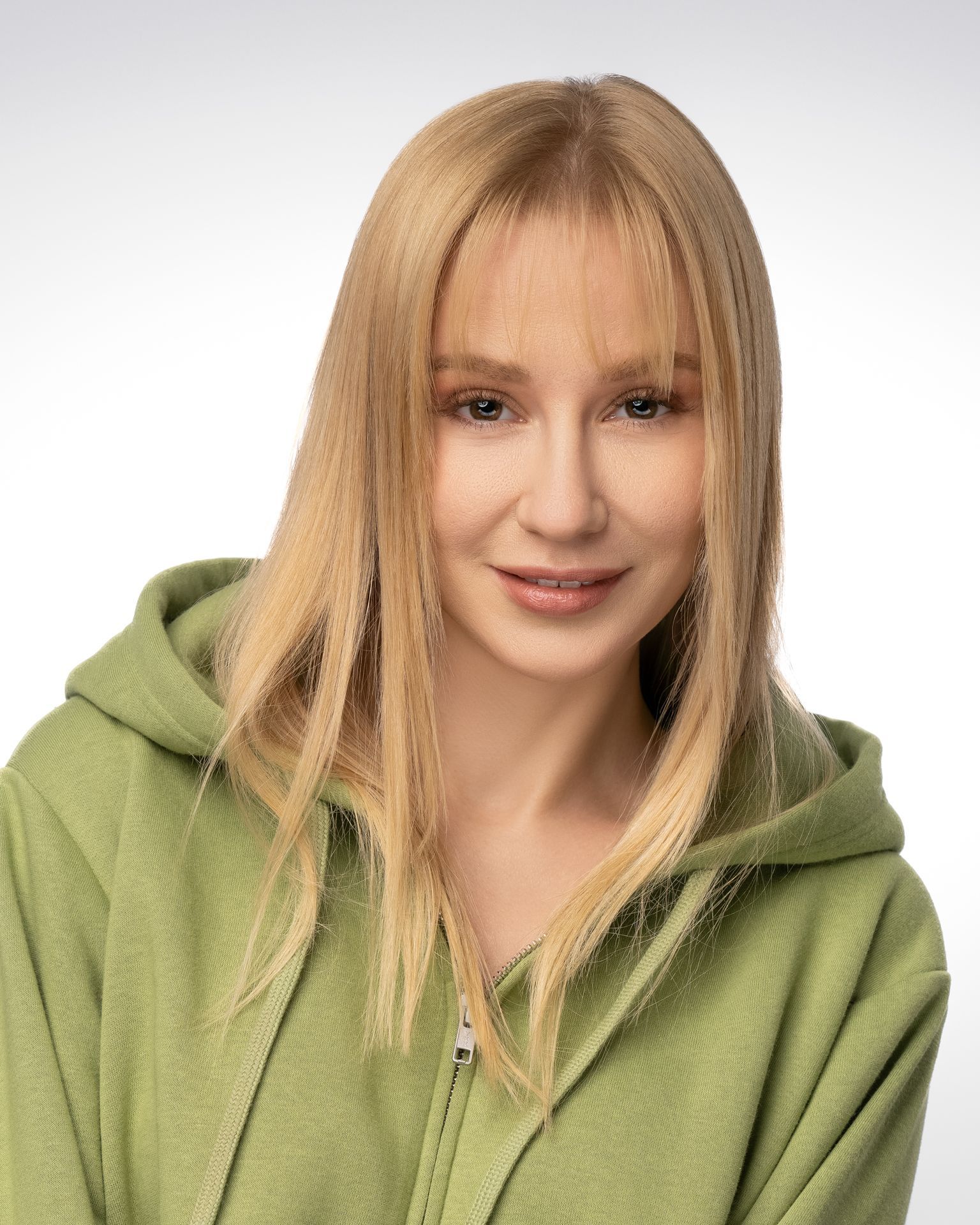
Clothing should support your face, not compete with it. For most actor headshots, solid colors and refined textures photograph best. Think soft knits, structured jackets, simple tees, open collars, or understated blouses that fit well and feel like something you would genuinely wear.
Avoid prominent logos, busy patterns, overly shiny fabrics, and accessories that pull attention away from your eyes. Very stark white or solid black can work in the right lighting, but each can create exposure challenges or feel visually severe. Rich neutrals, muted blues, greens, burgundies, and warm earth tones often add dimension while preserving a natural, contemporary look.
Bring a small range of options rather than relying on one outfit. Two or three tops or layers with different colors and levels of formality are usually enough to create variation. A photographer can help identify what works best against the chosen background and under the lighting setup.
Fit matters more than the label. Clothing that is too loose can flatten your shape, while clothing that is overly tight can restrict movement and make you self-conscious. You want to be able to sit, stand, breathe, and respond naturally throughout the session.
Let Expression Come From Connection, Not Performance
The eyes carry the headshot. A technically beautiful image will still feel distant if your gaze is disconnected. Rather than trying to hold a fixed smile or manufacture intensity, give yourself something real to respond to.
An experienced photographer will direct you through conversation, posture changes, pacing, and small shifts in thought. This collaboration matters. The most memorable frames often happen between poses, when an expression settles into something relaxed, alert, and unmistakably yours.
Try not to over-rehearse in the mirror. Practicing can help you notice habits, such as a tense jaw or raised shoulders, but it can also make your expression feel controlled. Arrive rested, hydrated, and open to direction. Your job is not to perform for the camera every second. It is to be present enough for the camera to find your range.
A gentle smile can communicate warmth and accessibility. A more neutral expression can suggest intelligence, composure, or dramatic depth. Neither is automatically better. What matters is whether the expression aligns with the impression you want to leave and whether it feels sustainable, not strained.
Prioritize Light, Framing, and Retouching That Feel Current
Casting headshots need a clean visual language. Your face should be well lit, your eyes clear, and the background free of distractions. The image should read well at a small size on a casting platform while retaining enough detail to feel dimensional when viewed larger.
Lighting creates mood, but it should not hide you. Heavy shadows, extreme angles, and stylized color treatments can be striking for an editorial portrait, yet they may be less useful as a primary casting image. A refined headshot balances artistry with clarity. It creates polish while allowing your features, skin tone, and expression to remain recognizable.
Framing should be close enough to establish connection. In most cases, a chest-up or shoulder-up composition gives casting professionals the information they need quickly. Leave room for your face to breathe, but do not make the image so wide that your expression gets lost.
Retouching deserves the same restraint. Professional finishing can reduce temporary blemishes, tame flyaways, and refine minor distractions. It should not erase texture, reshape your features, or create a version of you that feels unfamiliar. Skin looks like skin. Character lines, freckles, and other defining details often contribute to the individuality that makes an actor memorable.
Work With a Photographer Who Understands the Assignment
A talented photographer is valuable, but a strong actor headshot photographer brings more than technical skill. They understand that the image has a job to do. They know how to create an environment where you can relax, recognize the difference between a pleasant expression and a castable one, and edit a gallery with your career goals in mind.
Before booking, review whether the photographer’s work feels current, natural, and varied. Do their subjects look like themselves? Are the images consistent in quality without becoming formulaic? Can they explain their process for planning, coaching, proofing, retouching, and final delivery?
Communication is part of the service. Share your agency requirements, intended casting platforms, and any upcoming role or market shift. If you are building materials across several cities or need a reliable visual standard as part of a larger creative career, choose a photography partner with an organized process and the flexibility to support you where you work.
At Art of Portraits, actor sessions are approached as intentional collaborations, pairing art-directed portraiture with practical guidance so your final selections feel confident, current, and ready for professional use.
Select Images for Use, Not Just Personal Preference
Your favorite photograph is not always the strongest casting headshot. You may be drawn to an image because it feels flattering, while a representative or trusted industry contact may respond more strongly to a frame with clearer presence and greater specificity.
When reviewing your proofs, look for images that feel alive at first glance. Are your eyes engaged? Does the expression feel believable? Would someone who meets you recognize you immediately? Does the image suggest a point of view without becoming too narrow?
Choose one primary headshot that best represents your current casting lane. If you need additional images, make sure each one serves a distinct purpose. A second look should offer a meaningful shift in energy, wardrobe, or tone, not a nearly identical frame with a slightly different smile.
Keep final files organized and sized appropriately for casting profiles, agency submissions, social media, and print needs. A well-produced session should give you images that are easy to use across the places where your professional presence is seen.
The right headshot does not ask casting to guess who you are. It gives them a clear reason to look again, then lets your work carry the conversation forward.
Share